
Interiors
/
On Design
Interior stylist Emily Wheeler on how she is creating soothing spaces for women and children who have fled domestic abuse
This writer, interior stylist and social entrepreneur is fighting London’s furniture poverty problem with sustainable solutions – and creating soothing spaces for women and children who have fled domestic abuse
Tell me about Furnishing Futures We are a new charity that creates and designs fully furnished healing homes for women and children who have been placed in unfurnished social housing after escaping domestic abuse. Social housing is typically given without any flooring, white goods or furniture and there is very little support available once the tenancy has been signed. Women have often had to leave everything behind and can spend months sleeping on cold concrete floors without a cooker to make a meal. We work in partnership with the interiors industry to tackle the issue of industry waste, giving brands, interior designers, event companies and retailers a sustainable solution for products they can’t sell, such as returns, seconds, ex-showroom or dead stock, and we use these to create well designed, trauma-informed healing homes for women and children in need.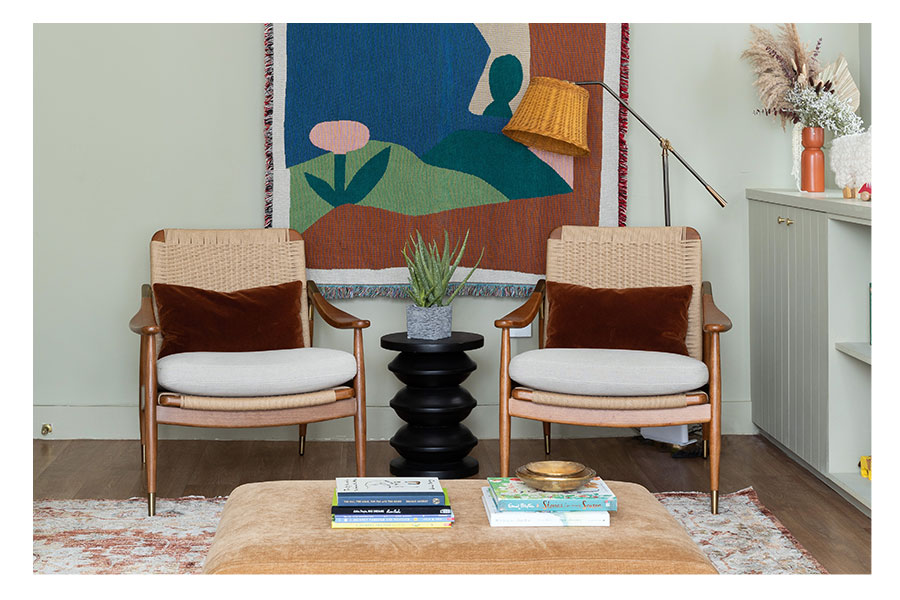 How did it come about?
I’m a registered social worker with nearly 20 years frontline child protection experience, but I am also a trained interior designer and I spent several years designing residential homes before becoming a real homes stylist and writer for magazines, and writing an interiors book, Creative Living London. I was meeting a lot of women who were in this situation, and I realised I had the skills to do something about it. It took me three years to grow the project into a registered charity, and we moved into our first warehouse in Leyton, East London seven months ago.
What is trauma-informed design?
Trauma-informed design means giving thought to how people who have experienced trauma are impacted by their environment, by paying attention to things like colours, textures, light, materials, sight lines and shapes to create spaces that soothe the nervous system and reduce stress.
Tell me about your collaboration with interior designer Rebecca Wakefield
Rebecca has been a wonderful supporter of my work since the beginning and fundraised for me when I was doing this on my own from my house, working around my full-time safeguarding job and trying to raise awareness of the issue. We’d talked about her collaborating with me to redesign a women’s refuge before the pandemic, but that got put on hold during lockdown. When life regained a little more normality we partnered with specialist refuge provider, Kiran Support Services, to redesign the communal living space and entrance hall of one of their refuges in London.
How did it come about?
I’m a registered social worker with nearly 20 years frontline child protection experience, but I am also a trained interior designer and I spent several years designing residential homes before becoming a real homes stylist and writer for magazines, and writing an interiors book, Creative Living London. I was meeting a lot of women who were in this situation, and I realised I had the skills to do something about it. It took me three years to grow the project into a registered charity, and we moved into our first warehouse in Leyton, East London seven months ago.
What is trauma-informed design?
Trauma-informed design means giving thought to how people who have experienced trauma are impacted by their environment, by paying attention to things like colours, textures, light, materials, sight lines and shapes to create spaces that soothe the nervous system and reduce stress.
Tell me about your collaboration with interior designer Rebecca Wakefield
Rebecca has been a wonderful supporter of my work since the beginning and fundraised for me when I was doing this on my own from my house, working around my full-time safeguarding job and trying to raise awareness of the issue. We’d talked about her collaborating with me to redesign a women’s refuge before the pandemic, but that got put on hold during lockdown. When life regained a little more normality we partnered with specialist refuge provider, Kiran Support Services, to redesign the communal living space and entrance hall of one of their refuges in London.
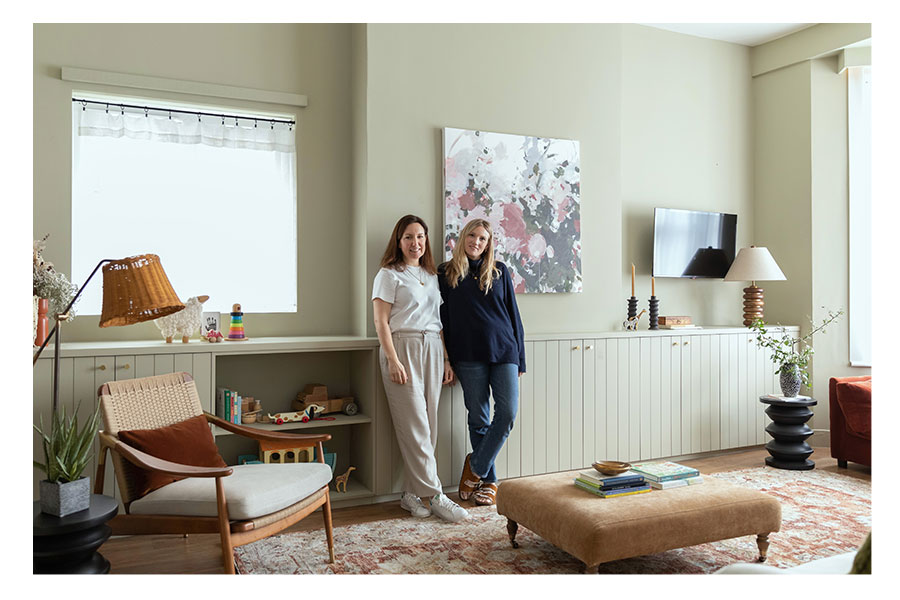
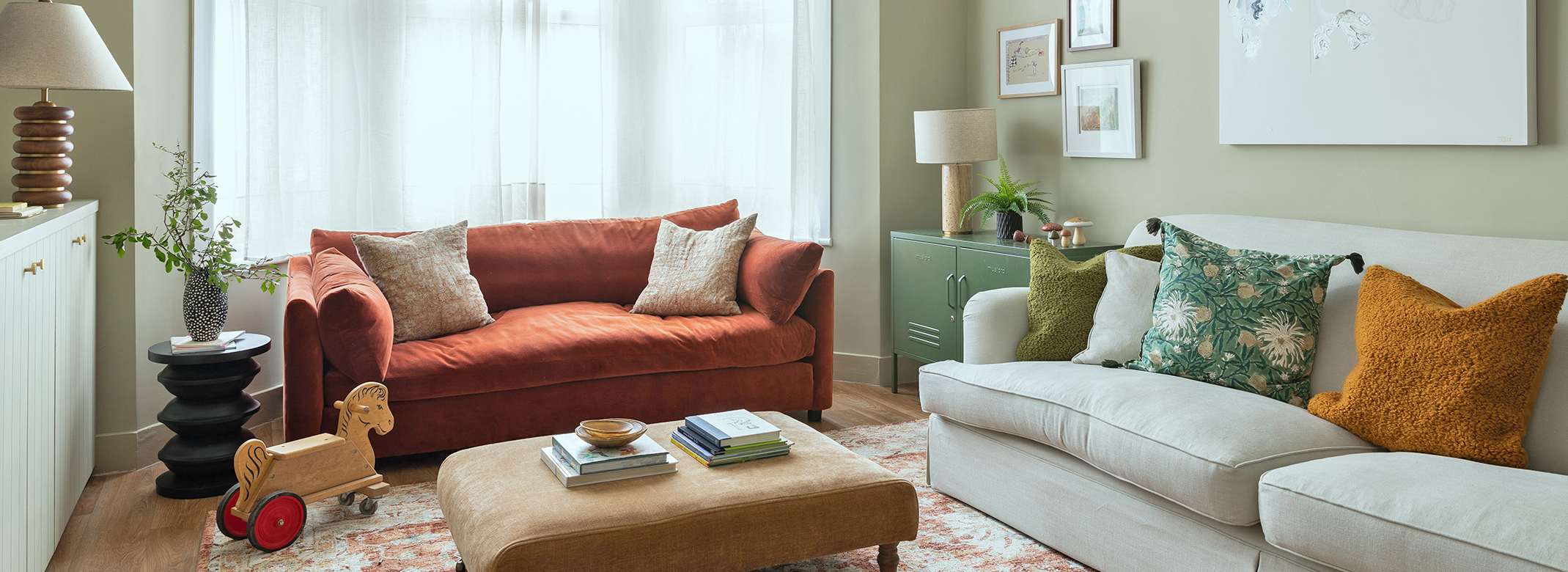
Above: Emily has worked with interior designer Rebecca Wakefield to redesign the communal living space of a women’s refuge in London
We met with the residents and staff to understand what they would like, and Rebecca designed a beautiful, welcoming and homely space that feels like a comforting home from home for the women and children living in the refuge. We had amazing support from our charity partners Soho Home and Soho House, as well as donated product from brands including Sanderson, William Morris, Wickes, Arlo and Jacob, Lux Deco and bespoke artwork from Juliane Kellersmann and Tracey Turner, as well as lots of generous product donated by small independent brands, and Jungle, the commercial fit out company built bespoke cabinetry for the project. This meant we could create something really special, which the women say has transformed the way they feel about being in the refuge. What is the role of sustainability in your work? We are in the middle of a climate emergency and we need to do everything we can to reduce waste and the amount of things we send to landfill. Furniture and textiles account for a huge proportion of the products sent to landfill every year and create toxic gases that pollute the earth and the atmosphere. I realised that the interiors industry could do better in terms of redistributing products that are no longer needed, and that we could offer the industry a sustainable solution to waste, as many of the pieces brands cannot use are in new condition or perfectly useable. Our model gives the industry the opportunity to have a sustainable solution to waste whilst creating powerful social impact. What are you working on next? We have a waiting list of women and children who are being rehoused and need support from us with creating safe and comfortable flats and houses for them after domestic abuse, so we’re very busy supporting families in London each week. Rebecca Wakefield and I are also going to be moving onto redesigning the seven bedrooms, kitchen, garden and nursery/playroom in the Kiran women’s refuge over the coming months; and Furnishing Futures is also redesigning the communal spaces in three women’s refuges in London for Solace Women’s Aid with the interior designer Clare Gaskin this year. (furnishingfutures.org) Creative Living London, rrp £19.95, Thames & Hudson